EFQM-Based IT Performance Assessment & Continuous Improvement Model
Quality & Organizational Excellence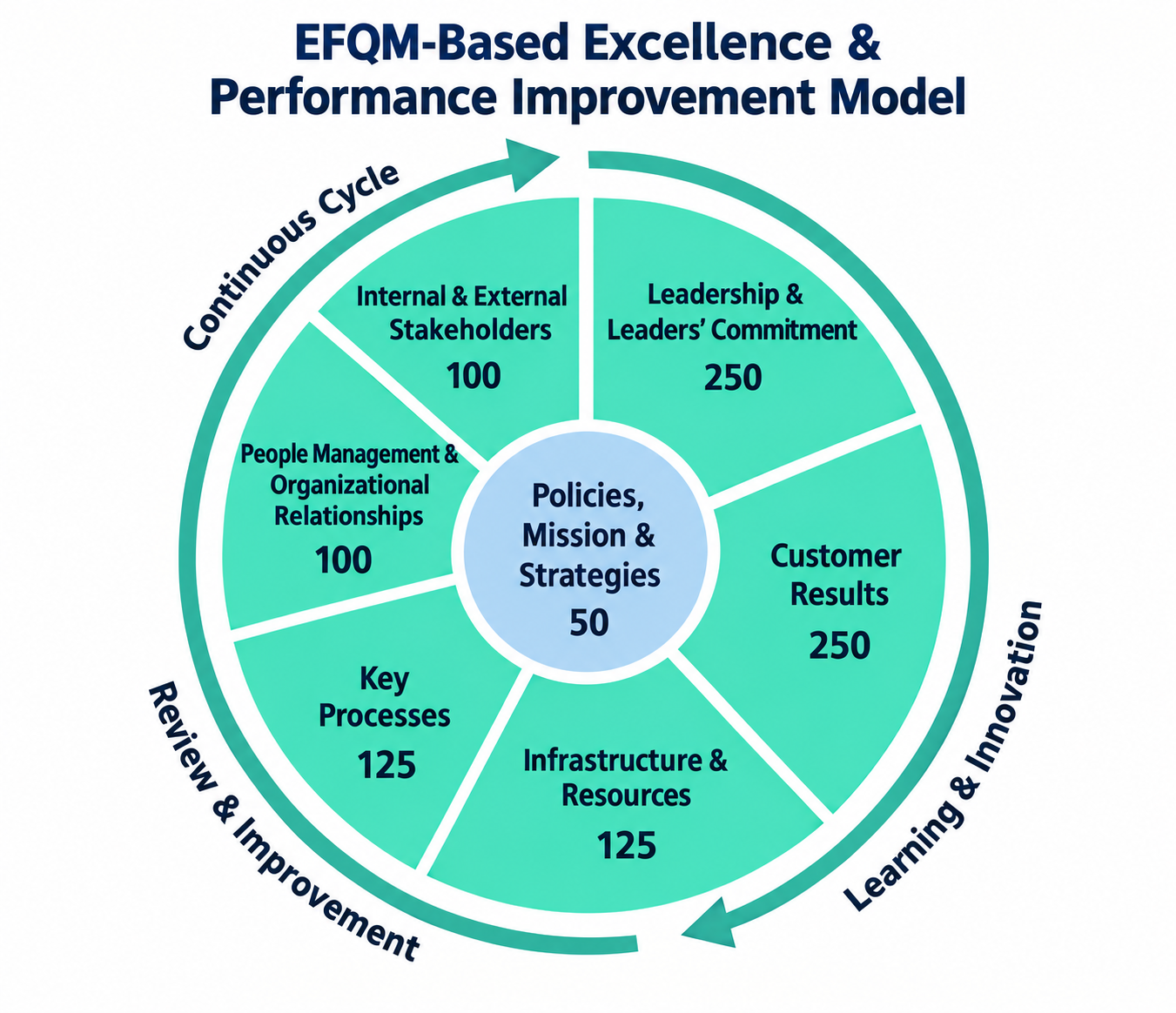
Click image to enlarge
Short Description
Designed and implemented an EFQM-based performance assessment and continuous improvement model for evaluating and improving the IT departments of Tehran Municipality’s 22 districts
Project Information
Organization
Tehran Municipality
Year
2015-2017
Role
Project Manager
Project Description
The project focused on designing and implementing an EFQM-based IT performance assessment and continuous improvement model for the IT departments of Tehran Municipality’s 22 districts.
The model was developed not merely as a ranking and evaluation mechanism, but as a structured framework for identifying improvement opportunities, supporting organizational development and strengthening the overall performance of regional IT departments.
The project was built around several key objectives:
Performance Assessment: Establishing a structured and consistent framework for assessing the performance and organizational capabilities of regional IT departments.
Benchmarking: Enabling comparison of IT performance across the 22 municipal districts and identifying strengths, weaknesses and improvement opportunities.
Continuous Improvement: Shifting the focus from assessment and ranking toward practical improvement and organizational development.
Management Feedback: Providing each assessed IT department with structured feedback reports, including identified gaps, strengths and recommendations for improvement.
Organizational Development: Supporting major improvement initiatives, including the review and development of IT organizational structures and management approaches.
Strategic Alignment: Developing a strategic model and communicating it to regional IT departments to support alignment and implementation.
Participation & Governance: Involving regional IT departments in the assessment and improvement process through a dedicated policy and decision-making council.
Training & Culture Building: Conducting training and awareness activities to familiarize IT personnel and managers with the assessment framework and promote a culture of continuous improvement.
The assessment approach was adapted from EFQM principles and used structured assessment criteria to evaluate organizational performance and identify areas requiring improvement.
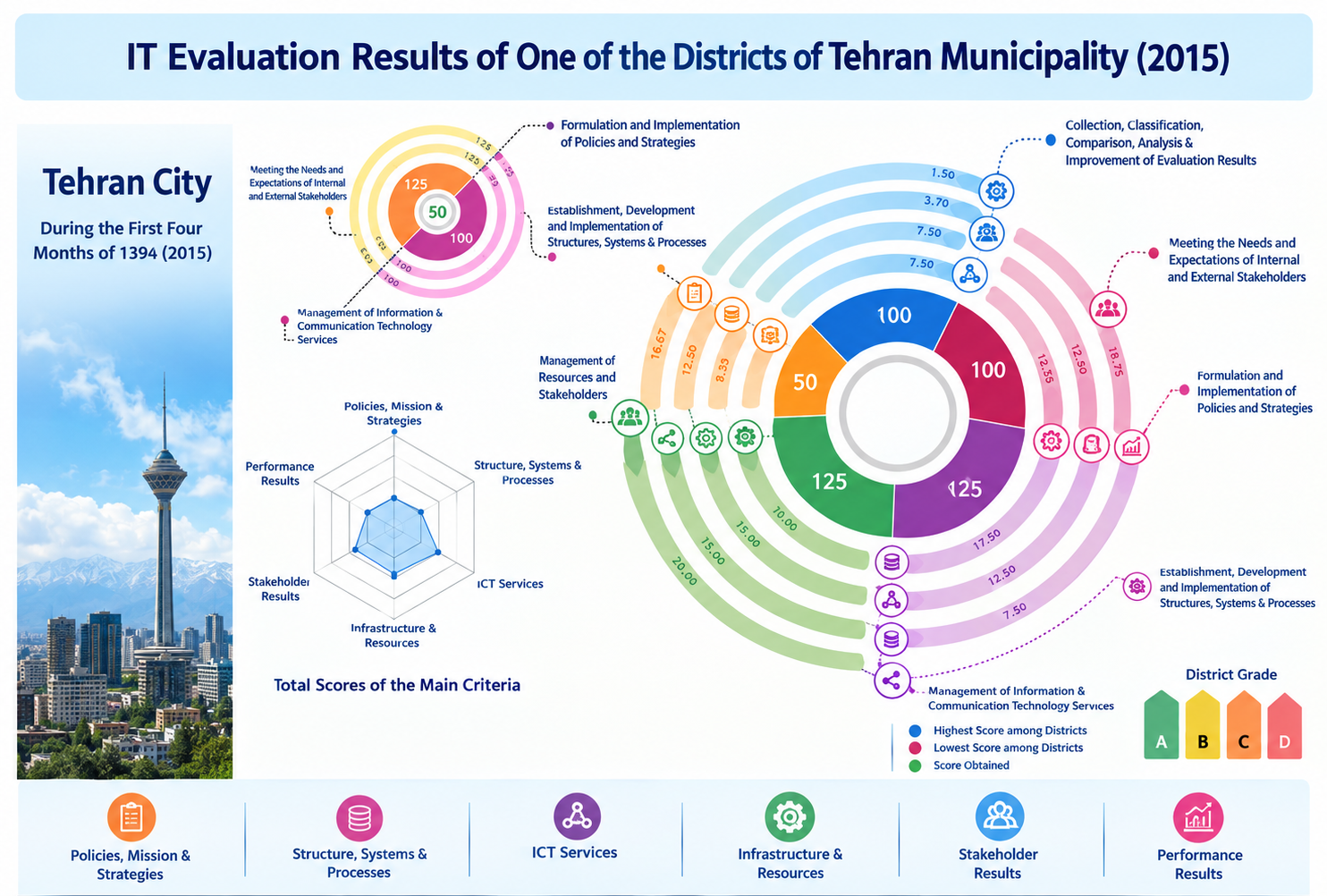
Following each assessment cycle, the results were communicated to the respective IT departments through feedback reports and improvement recommendations. The assessment outcomes were also used as a basis for defining broader organizational improvement initiatives at the municipal level.
Challenge
Resistance to change among the IT managers of the municipal districts – the need for support from district managers to implement the improvements resulting from the project.
Technologies / Skills
EFQM, Performance Assessment, Organizational Excellence, Benchmarking, Continuous Improvement, IT Governance
Deliverables
EFQM-based IT performance assessment model
Assessment criteria and evaluation framework
IT department assessment results
Benchmarking and performance analysis
Individual feedback reports
Improvement recommendations and roadmaps
Strategic improvement model
Training and awareness materials
Organizational improvement initiatives
Achievements
22 municipal IT departments assessed using a structured EFQM-based framework
Established a consistent approach for IT performance assessment and benchmarking
Shifted the assessment focus from ranking to continuous improvement
Provided structured feedback and improvement recommendations following assessments
Supported organization-wide improvement initiatives in IT structure and strategic management
Increased regional IT department participation in performance improvement and decision-making
Related Document
Part of the Evaluation Feedback Report for One of the Municipal Districts
Open DocumentTags
EFQM
Organizational Excellence
IT Governance
Performance Management
IT Maturity
Benchmarking
Continuous Improvement
Quality Management
Organizational Development
Project Gallery
Click to enlarge
Project added:
2026-09-06